The Flour-Dusted Truth: Discover the Secret Behind the Best Restaurant Pizza
The Flour-Dusted Truth: Discover the Secret Behind the Best Restaurant Pizza
Have you ever sat in a dimly lit booth, staring at a slice of pizza so beautiful it made you want to apologize to your home oven for all the lies you’ve told it? We’ve all been there. You try to recreate that magic at home with a rolling pin and a jar of “Presto-Pizza” sauce, but the result usually tastes like seasoned drywall. It’s a tragic reality. But why? What is the actual sorcery happening behind those swinging kitchen doors?
The truth is, authentic restaurant pizza isn’t just food; it’s a high-stakes combination of chemistry, pyromania, and a terrifying amount of patience. If you’ve ever wondered why that local spot has a line around the block while your kitchen just has a smoke alarm that won’t stop screaming, it’s time to pull back the curtain on the industry’s delicious secrets.
The Volcanic Oven: Heat That Would Scare a Dragon
The first and most painful secret is that your home oven is essentially a heated cupboard compared to what’s in a professional kitchen. To achieve a true gourmet pizza experience, you need temperatures that border on the supernatural.
While your kitchen appliance tops out at a polite 500°F, a professional wood-fired pizza oven is roaring at 900°F or more. This isn’t just for show; this extreme heat causes “oven spring,” where the gases in the dough expand instantly, creating those airy, cloud-like pockets in the crust. This is also how you get “leopard spotting”—those charred, flavorful bubbles that look like a safari but taste like heaven. Without that inferno, you’re just baking bread; with it, you’re forging an authentic Italian pizza.
The Dough Whisperers: Fermentation is a Virtue
The second secret is that the best dough has a longer social life than you do. Great pizzerias don’t just mix flour and water and throw it in the oven. They practice “cold fermentation.” That dough sits in a refrigerator for 24, 48, or even 72 hours, slowly developing flavor and breaking down complex sugars.
This patience is what creates a signature craft pizza with that distinct, slightly tangy “sourdough” kick. It’s also the secret to the crispy thin crust that possesses structural integrity. If you can’t perform the “New York Fold” without the slice collapsing like a wet napkin, the dough wasn’t respected. In the world of New York style pizza, the dough is the hero, and the sauce is just the supporting actor with a really good agent.
The Sauce and Topping Synergy: Less is Actually More
We’ve all been tempted to load a pizza with seventeen different meats, four types of peppers, and enough cheese to clog a storm drain. This is a rookie mistake. The secret behind the best pizza slices is balance.
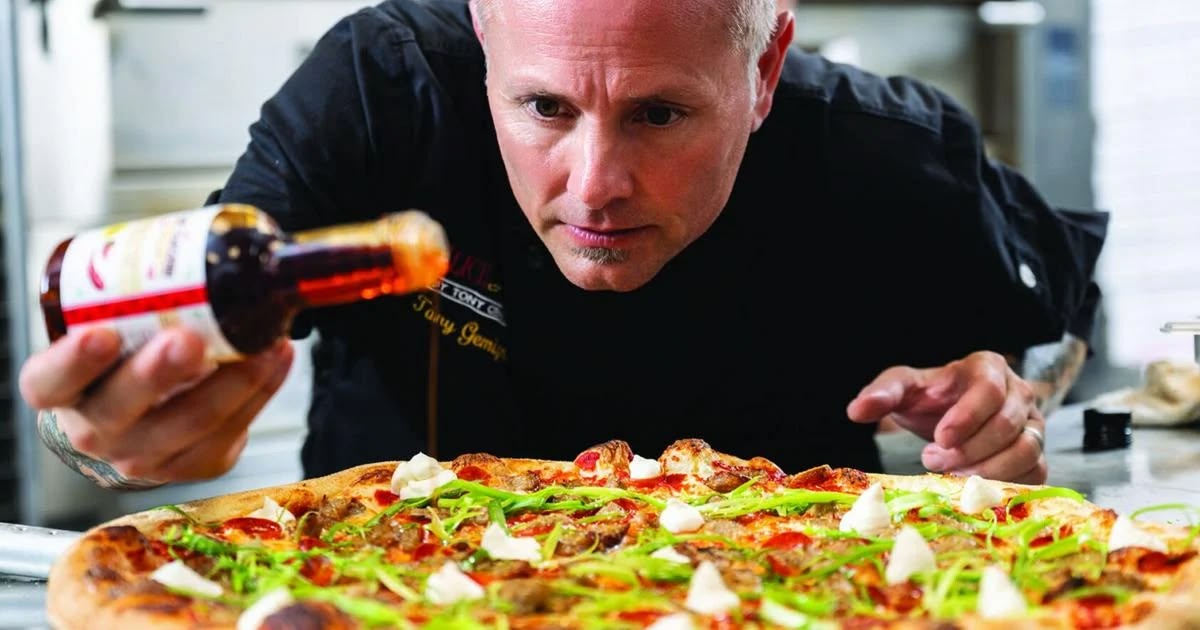
An authentic restaurant pizza focuses on high-quality, high-impact ingredients. We’re talking San Marzano tomatoes that were grown in volcanic soil, buffalo mozzarella that was probably pampered more than most house pets, and fresh basil added at the exact right micro-second. When you step into big man pizza the realm of modern flavor pizza, the “secret” is pairing things like hot honey with salty soppressata or earthy truffles with creamy ricotta. It’s a calculated flavor explosion, not a random pile of toppings.
The Final Secret: The Human Element
At the end of the day, the biggest secret is the person behind the peel. It’s the intuition to know when the crust is perfectly charred, the strength to hand-stretch dough without tearing it, and the sheer bravery to work next to a 900-degree hole in the wall all night.
A true restaurant pizza experience is the culmination of years of obsession. So, the next time you take a bite of that perfect, crunchy, cheesy masterpiece, remember: you’re not just eating dinner. You’re eating a masterpiece of science and fire.